
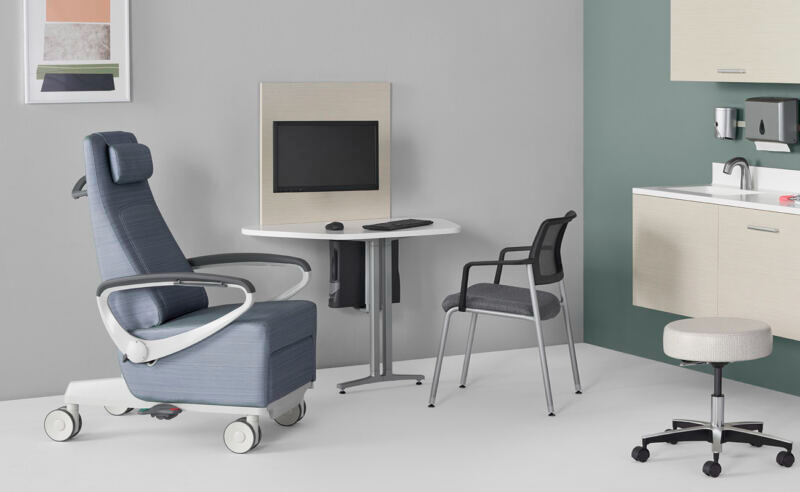
People come in different heights, weights, leg lengths, and body proportions, so one chair setting cannot suit every person. A good office chair gives users control over key parts such as seat height, lumbar support, armrests, and back angle. These adjustments help workers find a comfortable sitting position during long hours. That flexibility makes ergonomic chairs Dubai a good choice for varied body types.
Seat height matches leg length
Seat height gives users one of the easiest adjustments. Taller users usually raise the seat to give their legs enough room, while shorter users lower it so their feet rest firmly on the floor. A suitable height keeps the knees close to a right angle and helps maintain a steady sitting position.
Seat depth supports different legs
Leg length varies greatly between people, even when two users share a similar height. Seat depth adjustment solves this issue. A deeper seat gives longer legs enough support, while a shorter setting suits people with shorter thighs. The front edge should leave a small gap behind the knees.
Lumbar support follows the back
Lower backs have different curves, so lumbar support requires flexibility. Adjustable lumbar cushions move upward or downward to match the user’s lower back. Some chairs also allow firmness adjustments. Proper positioning gives the lower spine steady support without pushing the body too far forward.
Armrests suit different shoulder heights
Shoulder height changes with body size and arm length. Adjustable armrests help users place their elbows comfortably beside the body. Height adjustment keeps the shoulders relaxed, while width adjustment gives the arms enough room. Some chairs also offer angle and depth controls for added flexibility.
Backrest reclines with body movement
People sit in different positions during work. Some prefer an upright posture for typing, while others lean back during calls or reading. Recline controls let users adjust the backrest to match these activities. A flexible backrest also gives the upper body room to shift position during the day.
Headrests support different neck positions
A headrest works best when it matches the user’s head and neck height. Taller users may raise it, while shorter users may lower it. Angle adjustment also helps position the support behind the head instead of pressing against the neck.