
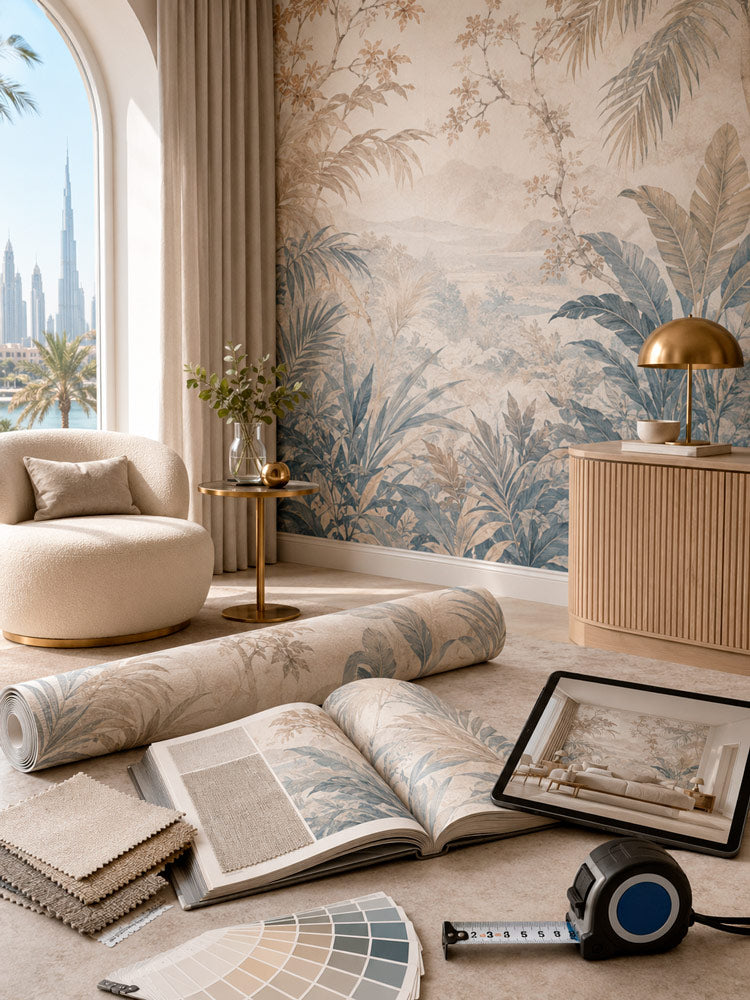
Mixing wallpaper patterns adds personality, depth, and character to any room. Interior designers combine colors, prints, and textures to achieve rooms that look polished rather than crowded. With a few smart choices, you can give plain walls fresh appeal and make every corner stand out.
The secret lies in balancing patterns and choosing wallpaper Abu Dhabi designs that complement each other naturally.
Start with a color palette
Choose two or three colors before selecting your wallpaper designs. A shared palette connects different prints and keeps the room looking coordinated. For example, navy blue, cream, and muted gold work well across floral patterns, geometric shapes, and textured finishes.
Repeat one color in each design to establish harmony. You can also match wallpaper shades with curtains, cushions, rugs, or furniture upholstery for a consistent interior scheme.
Combine large and small patterns
Pattern scale makes a noticeable difference when mixing wallpaper. Pair a large floral print with a smaller geometric design to establish contrast without overwhelming the room. Large patterns attract attention, while smaller prints add detail and visual interest.
Avoid placing several bold designs beside each other, as competing patterns can make the space look busy. Instead, let one wallpaper be the main feature while the other supports it.
Mix textures with printed designs
Texture adds depth without introducing another dominant pattern. Pair linen-effect wallpaper with delicate botanical prints, or a subtle grasscloth design with simple stripes. These combinations offer variety while maintaining a refined appearance.
Textured wallpaper also works well in bedrooms, dining rooms, and living areas where soft finishes complement comfortable furnishings. Choose finishes that share similar undertones to keep the overall look balanced and inviting.
Create a feature wall
A feature wall gives your favourite pattern room to stand out. Select a wall behind the bed, sofa, or dining table and cover it with a distinctive print. Use a quieter complementary design on another wall or within an adjoining area.
This establishes a clear focal point without filling every surface with competing details. Check how natural and artificial light affect each pattern before making your final selection.
Connect adjoining rooms thoughtfully
Wallpaper combinations look particularly appealing when neighboring rooms share a color or design detail. For instance, a hallway with striped wallpaper can connect beautifully with a living room featuring botanical prints in similar shades.
Keep flooring, wood finishes, or decorative accessories consistent across both spaces. This simple connection gives the home a cohesive look while letting each room express its own personality.